



Dry Needling Course · Lisbon
Dry Needling Course · Lisbon
Master Myofascial Pain Management with Clinical Safety, Anatomical Precision and Evidence-Based Dry Needling
Develop clinical skills to identify, assess and treat myofascial dysfunctions through a methodology that integrates clinical reasoning, palpatory anatomy, Dry Needling, Peripheral Neuromodulation, Electrotherapy and intensive supervised practice.
Lisbon · Portugal
Dr Alexandre Fortes
Myofascial Pain + Trigger Points
Supervised hands-on training
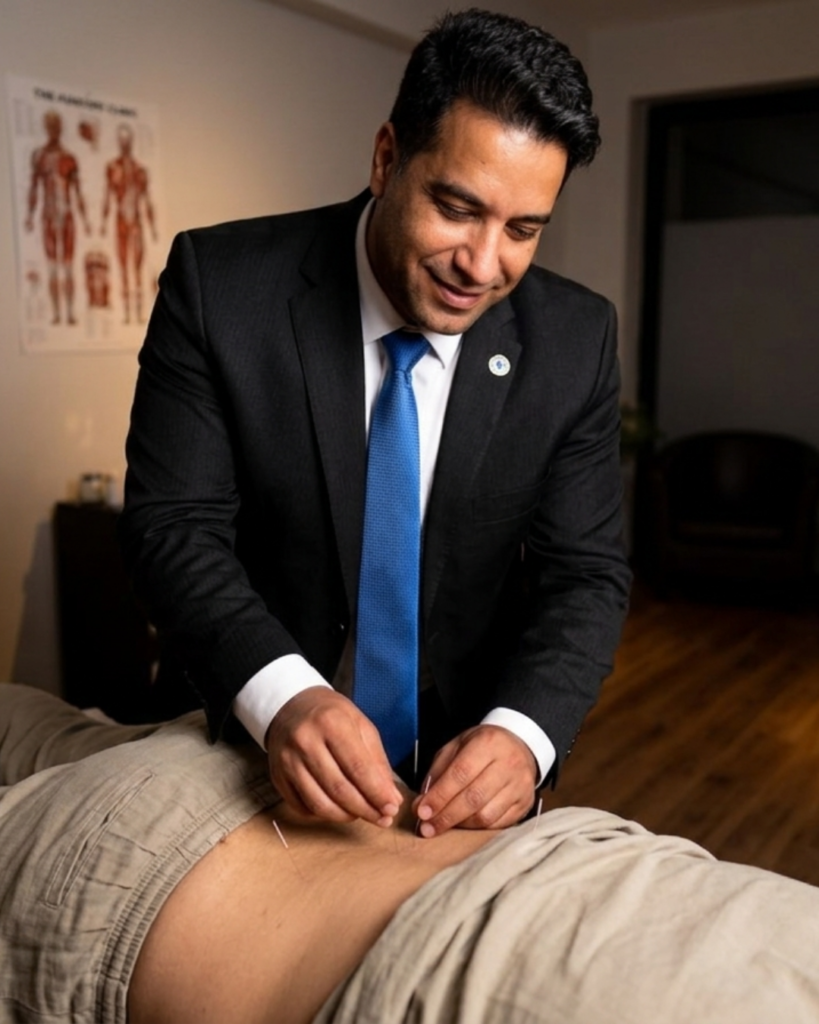
Clinical Dry Needling Excellence
Advanced training in Myofascial Pain, Dry Needling, Peripheral Neuromodulation and Electrotherapy.
Clinical Dry Needling Excellence
Advanced training in Myofascial Pain, Dry Needling, Peripheral Neuromodulation and Electrotherapy.
The pain that does not show up on scans
The pain that does not show up on scans
Not every pain can be explained by imaging.
There is a clinical scenario that repeats itself every day in practices and clinics: a patient arrives after weeks, months or even years of persistent pain. They have already undergone tests, tried different therapeutic approaches and yet the pain remains.
There is a clinical scenario that repeats itself every day in practices and clinics: a patient arrives after weeks, months or even years of persistent pain. They have already undergone tests, tried different therapeutic approaches and yet the pain remains.
This is precisely where the real clinical challenge begins.
Because treating pain does not depend solely on knowing a technique. It depends on understanding the functional origin of the dysfunction, correctly identifying the tissues involved and deciding, with confidence, which approach is most appropriate for each patient.
This is the ability that distinguishes a professional who performs procedures from a professional who solves clinical problems.
This is precisely where the real clinical challenge begins.
Because treating pain does not depend solely on knowing a technique. It depends on understanding the functional origin of the dysfunction, correctly identifying the tissues involved and deciding, with confidence, which approach is most appropriate for each patient.
This is the ability that distinguishes a professional who performs procedures from a professional who solves clinical problems.
The real challenge
The real challenge
The issue is not the needle. It is the clinical reasoning.
For many years, Dry Needling has been presented as a technique. In reality, the technique represents only a small part of the therapeutic process.
The best clinical outcomes begin long before the first needle is inserted: they begin with observation, functional assessment, palpatory anatomy, precise identification of trigger points and evidence-based clinical reasoning.
When these foundations are solid, the intervention becomes more predictable, safer and significantly more effective.
The core transformation
The core transformation
Monday will be different.
Imagine returning to practice after the training. The next patient presents with persistent neck pain. Another reports long-standing lower back discomfort. A third shows functional limitation associated with active trigger points. This time, the approach is different.
Imagine returning to practice after the training. The next patient presents with persistent neck pain. Another reports long-standing lower back discomfort. A third shows functional limitation associated with active trigger points. This time, the approach is different.
More objective assessment
Greater technical safety
More precise palpation
Evidence-based intervention
Structured clinical decision-making
Aplicação imediata na clínica
More objective assessment
Greater technical safety
More precise palpation
Evidence-based intervention
Structured clinical decision-making
Immediate clinical application
Methodology
Methodology
Clinical excellence begins before the first needle.
This training was designed to develop a complete process of assessment, decision-making and execution. First, understand. Then, locate. Finally, intervene.
This training was designed to develop a complete process of assessment, decision-making and execution. First, understand. Then, locate. Finally, intervene.
ETAPA 01
Understanding myofascial pain
Learn to interpret pain beyond the symptom, connecting the complaint, function, involved muscles, trigger points and muscular dysfunction.
ETAPA 02
Developing anatomical precision
Anatomy stops being purely theoretical and becomes palpatory, functional and applied to the real body.
ETAPA 03
Identifying trigger points
Learn to recognise patterns of tension, hypersensitivity and muscular dysfunction in order to intervene with greater clinical judgement.
ETAPA 04
Mastering needle handling
Technical safety is built through supervised practice, motor control, direction, depth and guided repetition..
ETAPA 05
Applying the technique by anatomical regions
The training progresses through muscle groups, myofascial chains and clinical regions to support practical application.
ETAPA 06
Integrating neuromodulation and electrotherapy
Expand clinical reasoning beyond traditional Dry Needling, with concepts applied to the peripheral nervous system.
Practical training
Practical training
You do not learn one isolated muscle. You learn a system.
Each demonstration is followed by supervised practice. Each practice session is supported by corrections. Each correction improves precision. Each new anatomical region adds a new clinical skill.
By the end of the training, the professional has mastered a structured protocol that can be safely applied in daily clinical practice.
The goal is not to finish the training with accumulated information. It is to finish prepared to apply it.
Clinical skills
Clinical skills
What you will master in this training
This training was designed to develop real, applicable and immediately useful skills for professional practice.
This training was designed to develop real, applicable and immediately useful skills for professional practice.
Clinical reasoning in myofascial pain
Trigger Points and muscular dysfunctions
Applied electrotherapy
Applied palpatory anatomy
Safe needle handling
Functional assessment
Evidence-based Dry Needling
Peripheral neuromodulation
Immediate clinical application
Clinical reasoning in myofascial pain
Applied palpatory anatomy
Evidence-based Dry Needling
Trigger Points and muscular dysfunctions
Safe needle handling
Peripheral neuromodulation
Applied electrotherapy
Functional assessment
Immediate clinical application
Programme
Programme
Training structure
A progressive journey that integrates preparation, clinical reasoning, technique, supervised practice and clinical application.
A progressive journey that integrates preparation, clinical reasoning, technique, supervised practice and clinical application.
Online Module
- Fundamentals of Dry Needling;
- Biosafety and application criteria;
- Applied palpatory anatomy;
- Introduction to electrotherapy.
- Concepts of peripheral neuromodulation;
- Interpretation of myofascial pain.
On-site Immersion
- Needle handling and control.;
- Approach by anatomical regions;
- Trunk, shoulder girdle and limbs;
- Trigger points and myofascial chains;
- Supervised practice;
- Individual technical correction.
Clinical gallery
CLINICAL GALLERY
Training you can see in practice
Technical authority, real supervision and applied learning. This course is not theoretical: it is clinical, practical and execution-focused.
Technical authority, real supervision and applied learning. This course is not theoretical: it is clinical, practical and execution-focused.
Supervision
Learning with real-time correction
Supervision
Learning with real-time correction
Precision
Technical detail
Hands-on
Applied practice
Social proof
Real training experience
Social proof
Real training experience
Anatomy
Pain mapping
Palpation
Anatomical reading

Instructor
Instructor
Dr Alexandre Fortes
Dr Alexandre Fortes leads this training with an approach centred on clinical practice, functional reasoning and the safe application of Dry Needling, Peripheral Neuromodulation and Electrotherapy techniques.
His pedagogical approach is clear: to ensure that participants complete the training with greater safety, greater precision and a stronger ability to apply these new skills in clinical practice.
- Approach focused on Myofascial Pain and musculoskeletal dysfunctions;
- Teaching with a strong supervised practical component;
- Integration of palpatory anatomy, Dry Needling and neuromodulation;
- Training oriented towards immediate clinical application.
Who it is for
Who it is for
Training for professionals who want to stop treating pain by trial and error.
Designed for healthcare professionals who want to develop advanced skills in myofascial pain management, with greater safety, precision and clinical differentiation.
Designed for healthcare professionals who want to develop advanced skills in myofascial pain management, with greater safety, precision and clinical differentiation.
Dentists
Osteopaths
Professionals treating orofacial and cervical pain
Rehabilitation professionals
Physiotherapists
Clinicians seeking differentiation
Frequently asked questions
Frequently asked questions
Key questions
No. Dry Needling is one of the core skills, but the training also integrates myofascial pain, trigger points, palpatory anatomy, clinical reasoning, peripheral neuromodulation, electrotherapy and supervised practice.
Yes. The training has a strong hands-on orientation, with demonstrations, supervised practice and technical correction to develop clinical safety.
Yes. The programme is suitable for professionals who want to deepen the technique, improve anatomical precision and integrate neuromodulation and electrotherapy into clinical practice.
The pedagogical objective is for participants to complete the training better prepared, safer and more confident to apply the skills in clinical practice, always respecting their professional and legal scope of practice.
Clinical decision
Clinical decision
Do not simply add another technique to your CV. Develop a differentiating clinical skill.
Mastering myofascial pain requires reasoning, precision, safety and practice. This training was designed to unite these four elements in an intensive, applied and clinically relevant experience.
Mastering myofascial pain requires reasoning, precision, safety and practice. This training was designed to unite these four elements in an intensive, applied and clinically relevant experience.